U.S. Treasury yields steady ahead of key U.S. inflation
Image Credit : Agence France-Presse
Source Credit : Portfolio Prints
The 10-year Treasury yield held largely steady on Thursday, as a surge in oil prices and a fresh batch of economic data kept investors focused on the evolving inflation outlook and the future path of interest rates.
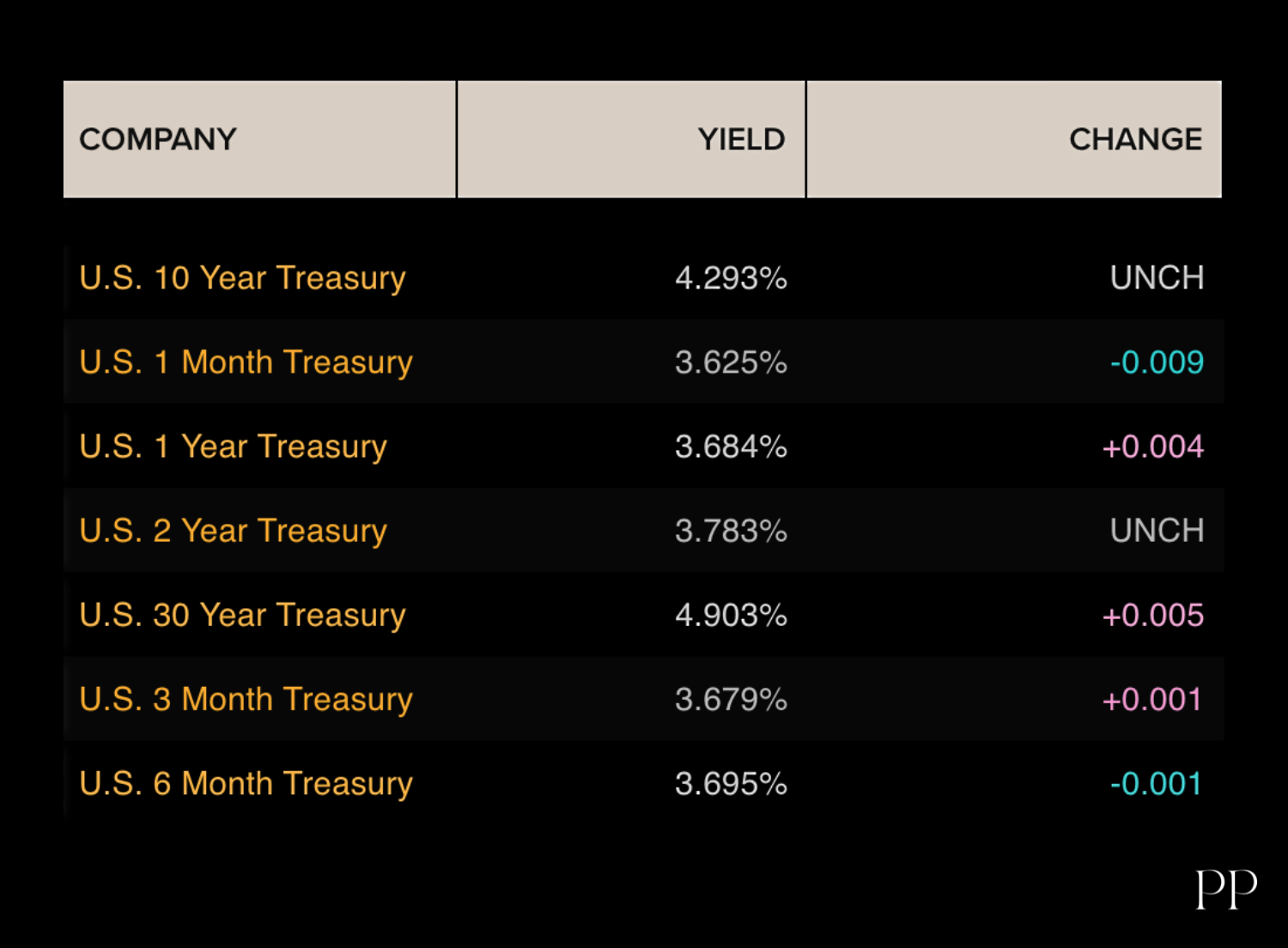
The yield on the benchmark 10-year U.S. Treasury note edged down by less than 1 basis point to 4.287%. Meanwhile, the 2-year Treasury yield—more sensitive to near-term Federal Reserve policy expectations—fell by over 1 basis point to 3.783%.
At the long end of the curve, the 30-year Treasury yield also dipped marginally, slipping by less than 1 basis point to 4.893%.
A basis point represents one-hundredth of a percentage point, and Treasury yields move inversely to prices.
 Markets had initially rallied into Treasurys following Tuesday night’s ceasefire agreement between the U.S. and Iran, which drove oil prices lower on Wednesday and boosted expectations for potential Federal Reserve rate cuts. However, that momentum faded as the ceasefire showed signs of fragility, with oil prices rebounding on Thursday.
U.S. West Texas Intermediate crude futures jumped more than 3% to settle at $97.87 per barrel, while Brent crude, the global benchmark, rose over 1% to close at $95.92 per barrel—reintroducing inflationary concerns into the market narrative.
As a result, traders are now pricing in roughly a 25% probability of a rate cut by year-end, according to CME’s FedWatch tool, following a sharp increase in easing expectations earlier in the week.
Investor attention also centered on Thursday’s economic data releases. The personal consumption expenditures (PCE) price index—the Federal Reserve’s preferred inflation gauge—rose 0.4% in February, in line with expectations, bringing the annual increase to 2.8%. Core PCE, which excludes food and energy, also matched forecasts.
However, some analysts caution that underlying inflation pressures remain elevated. Sonu Varghese, chief macro strategist at Carson Group, noted that PCE inflation has been running at an annualized pace above 4% over the past three months, with core inflation exceeding 4.5%.
He argued that such levels cannot be dismissed as temporary distortions linked solely to tariffs or external shocks, emphasizing that inflationary pressures were already entrenched prior to the Middle East tensions.
Varghese added that the Federal Reserve appears increasingly out of sync with market realities, suggesting that policymakers may be underestimating the persistence of inflation.
Indeed, even before the escalation involving Iran, inflation remained above the Fed’s 2% target, complicating the central bank’s policy outlook.
Minutes from the Federal Reserve’s March meeting reinforced this cautious stance, indicating that policymakers remain open to further rate hikes if inflation continues to overshoot targets, while also stressing the need for flexibility in response to incoming data.
Market strategists point to energy prices and geopolitical developments as critical variables. Chris Maxey, chief market strategist at Wealthspire, described these factors as a “wildcard” for both bonds and monetary policy.
He noted that if energy-driven price pressures prove transitory and core inflation continues to moderate, the Fed could maintain current rates or even pivot toward easing. However, if these pressures begin to spill over into broader inflation or expectations, the threshold for rate cuts would rise significantly.
On the labor front, initial jobless claims for the week ending April 4 came in at 219,000—slightly above expectations of 210,000—signaling some softening in labor market conditions but not yet indicating a significant deterioration.
Markets had initially rallied into Treasurys following Tuesday night’s ceasefire agreement between the U.S. and Iran, which drove oil prices lower on Wednesday and boosted expectations for potential Federal Reserve rate cuts. However, that momentum faded as the ceasefire showed signs of fragility, with oil prices rebounding on Thursday.
U.S. West Texas Intermediate crude futures jumped more than 3% to settle at $97.87 per barrel, while Brent crude, the global benchmark, rose over 1% to close at $95.92 per barrel—reintroducing inflationary concerns into the market narrative.
As a result, traders are now pricing in roughly a 25% probability of a rate cut by year-end, according to CME’s FedWatch tool, following a sharp increase in easing expectations earlier in the week.
Investor attention also centered on Thursday’s economic data releases. The personal consumption expenditures (PCE) price index—the Federal Reserve’s preferred inflation gauge—rose 0.4% in February, in line with expectations, bringing the annual increase to 2.8%. Core PCE, which excludes food and energy, also matched forecasts.
However, some analysts caution that underlying inflation pressures remain elevated. Sonu Varghese, chief macro strategist at Carson Group, noted that PCE inflation has been running at an annualized pace above 4% over the past three months, with core inflation exceeding 4.5%.
He argued that such levels cannot be dismissed as temporary distortions linked solely to tariffs or external shocks, emphasizing that inflationary pressures were already entrenched prior to the Middle East tensions.
Varghese added that the Federal Reserve appears increasingly out of sync with market realities, suggesting that policymakers may be underestimating the persistence of inflation.
Indeed, even before the escalation involving Iran, inflation remained above the Fed’s 2% target, complicating the central bank’s policy outlook.
Minutes from the Federal Reserve’s March meeting reinforced this cautious stance, indicating that policymakers remain open to further rate hikes if inflation continues to overshoot targets, while also stressing the need for flexibility in response to incoming data.
Market strategists point to energy prices and geopolitical developments as critical variables. Chris Maxey, chief market strategist at Wealthspire, described these factors as a “wildcard” for both bonds and monetary policy.
He noted that if energy-driven price pressures prove transitory and core inflation continues to moderate, the Fed could maintain current rates or even pivot toward easing. However, if these pressures begin to spill over into broader inflation or expectations, the threshold for rate cuts would rise significantly.
On the labor front, initial jobless claims for the week ending April 4 came in at 219,000—slightly above expectations of 210,000—signaling some softening in labor market conditions but not yet indicating a significant deterioration.