Source Credit : Portfolio Prints
Background
In early 2026, the financial world has been set abuzz by the 'Warsh Effect.' On January 30, 2026, President Donald Trump officially nominated former Federal Reserve Governor Kevin Warsh to succeed Jerome Powell as Chair of the Federal Reserve when Powell’s term expires in May 2026.
This leadership transition marks a pivotal moment for the U.S. economy, as the Fed braces for a shift in how it manages inflation, interest rates, and its own massive balance sheet.
Who is Kevin Warsh?
At 55, Warsh is no stranger to the Eccles Building. He served as the youngest-ever Federal Reserve Governor from 2006 to 2011, acting as a critical bridge between the Fed and Wall Street during the 2008 financial crisis.
| Feature |
Description |
| Background |
Former Morgan Stanley executive and Bush Administration advisor. |
| Stance on Data |
Highly critical of the Fed's "data dependency," arguing they focus too much on lagging indicators rather than forward-looking trends. |
| Balance Sheet |
A vocal critic of "bloated" balance sheets; he favors an aggressive reduction of the Fed's $6.6 trillion in assets. |
The "Warsh Effect": A New Direction for the Fed
The "Warsh Effect" refers to the market volatility and policy speculation triggered by Warsh’s unique standing as both a former "inflation hawk" and a current advocate for "regime change" at the central bank. Unlike traditional Fed leaders, Warsh has been vocal about his desire to narrow the Fed's mandate and reduce its footprint in the economy.
Key Pillars of the Warsh Era
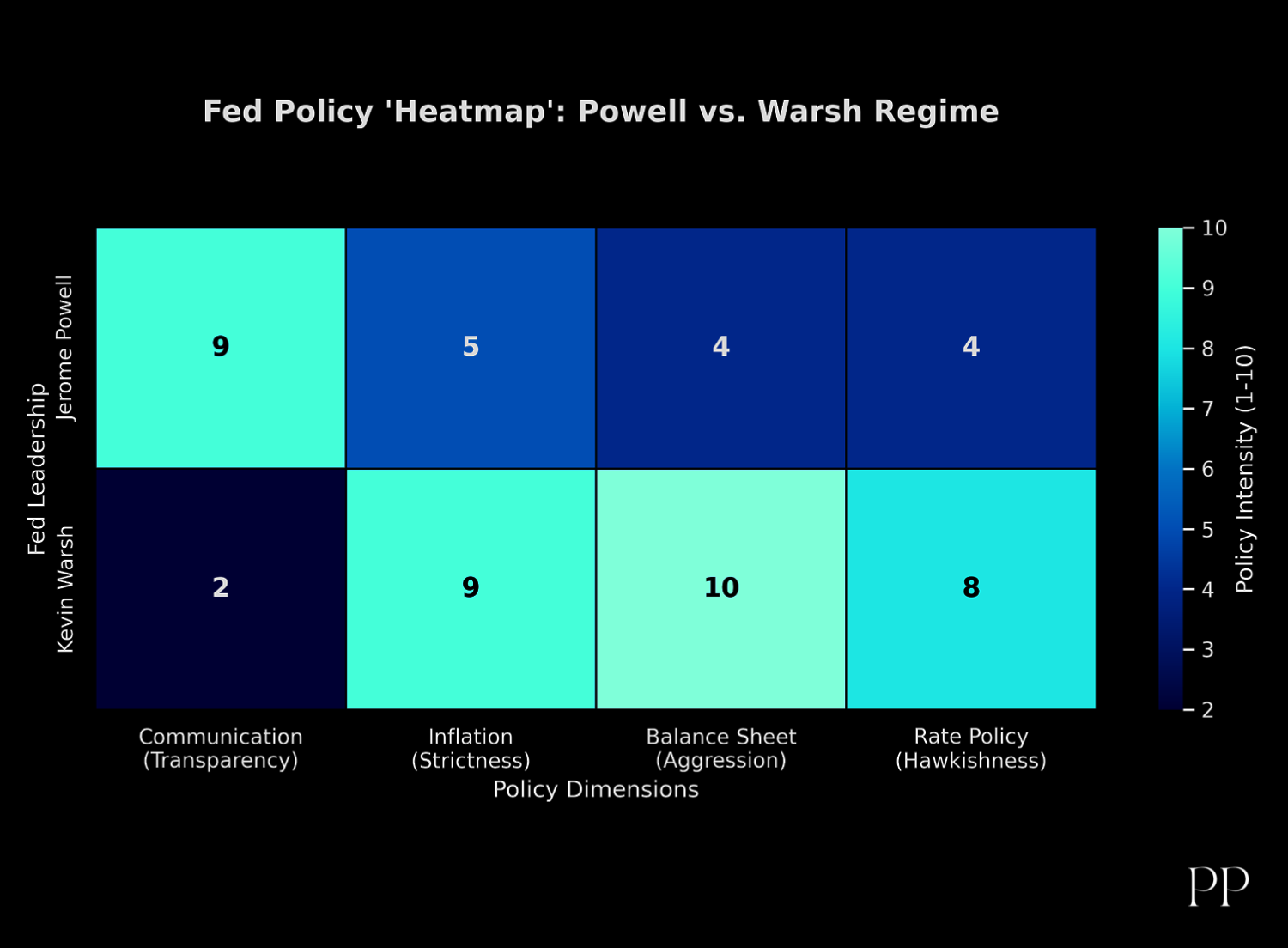
- Balance Sheet Reduction: Warsh has long criticized the Fed’s "bloated" $6.6 trillion balance sheet. He is expected to move aggressively toward Quantitative Tightening (QT), aiming to shrink the Fed’s bond holdings to reduce what he calls "market distortions."
- Rate Cut Pragmatism: While historically a hawk, Warsh has recently aligned with the Trump administration’s desire for lower rates. He argues that an AI-driven productivity boom may allow the economy to grow faster without triggering inflation, justifying a more "dovish" (lower rate) path in the near term.
- Ending "Forward Guidance": Warsh has famously advised the Fed to "skip opportunities to share their latest musings." He prefers a less predictable communication style, believing that giving too much certainty to markets makes the Fed a "prisoner of its own words."
Market Reaction: Cautious Relief and Volatility
| Asset Class |
Immediate Reaction |
Reason |
| Gold & Silver |
Plummeted (Gold -9%, Silver -26%) |
Investors exited "debasement" trades as Warsh is seen as a credible inflation fighter. |
| U.S. Dollar |
Strengthened |
Higher confidence in the dollar's stability under a conventional, experienced pick. |
| Bond Yields |
Bear Steepening |
Anticipation of a smaller Fed balance sheet pushed long-term borrowing costs higher. |
| Equities |
Mixed |
Markets are weighing the benefit of lower rates against the risk of reduced liquidity. |
The Challenges Ahead
Despite the nomination, Warsh faces significant hurdles before he can take the helm in May:
Senate Confirmation
While widely respected, his confirmation may be delayed. Senator Thom Tillis has indicated he will oppose any nominee until a DOJ investigation into Chair Powell’s 2025 testimony is resolved.
FOMC Dynamics
The Fed Chair is only one of 12 voting members. To implement "regime change," Warsh will need to build a consensus among a committee that has traditionally favored a more cautious, data-dependent approach.
Independence vs. Influence
The biggest test will be maintaining the Fed’s independence while navigating pressure from the White House for rapid rate cuts, especially if inflation remains "sticky" due to trade tariffs.
The Bottom Line
The "Warsh Effect" signals a Fed that may soon be smaller, less vocal, and more focused on long-term productivity than short-term data prints. Whether this leads to a "Great Era" of growth or a period of market instability will depend on how the new leadership balances political expectations with economic reality.