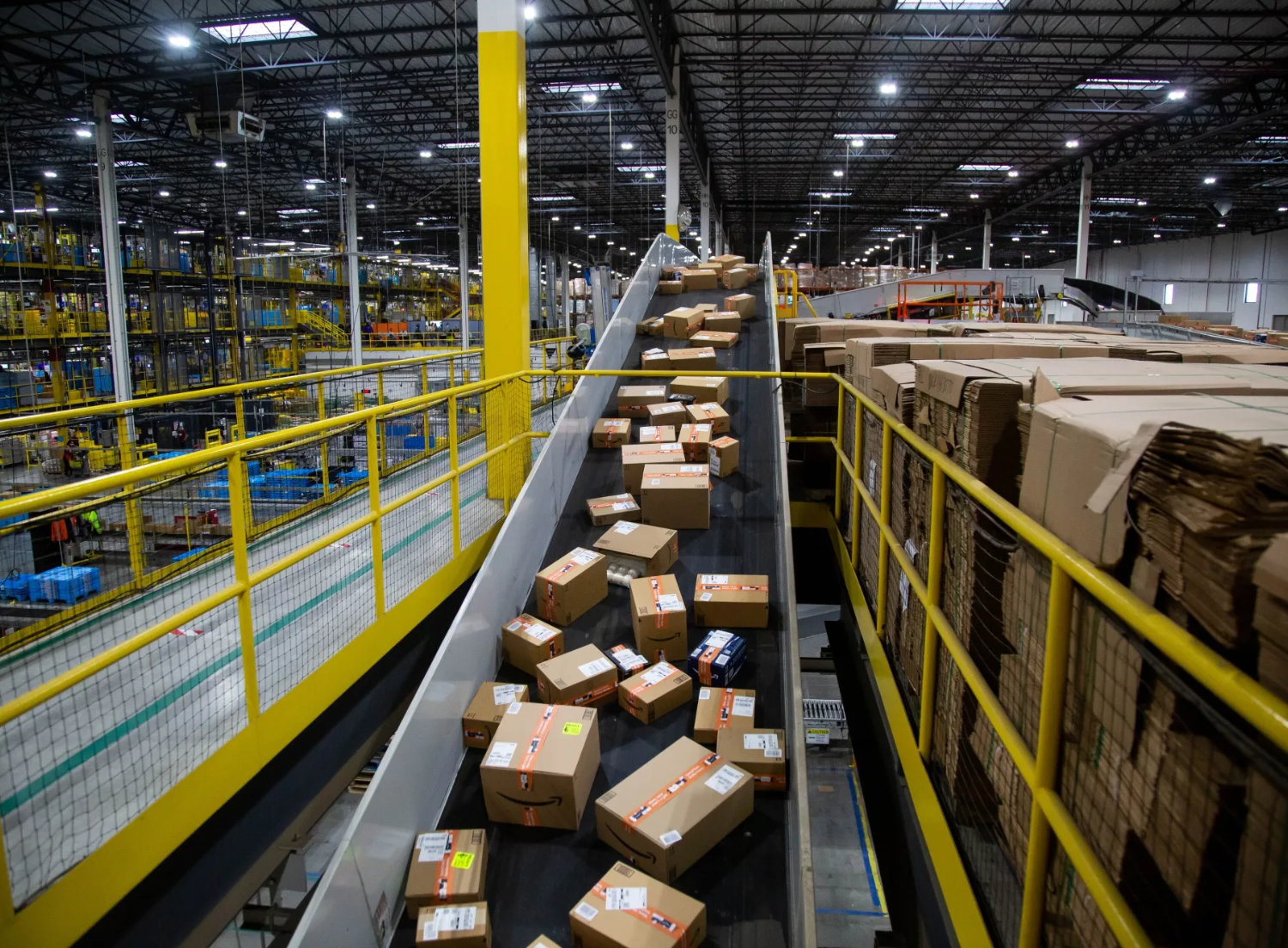
U.S. nonfarm payrolls increased by 178,000 in March
Image Credit : Xinhua
Source Credit : Portfolio Prints
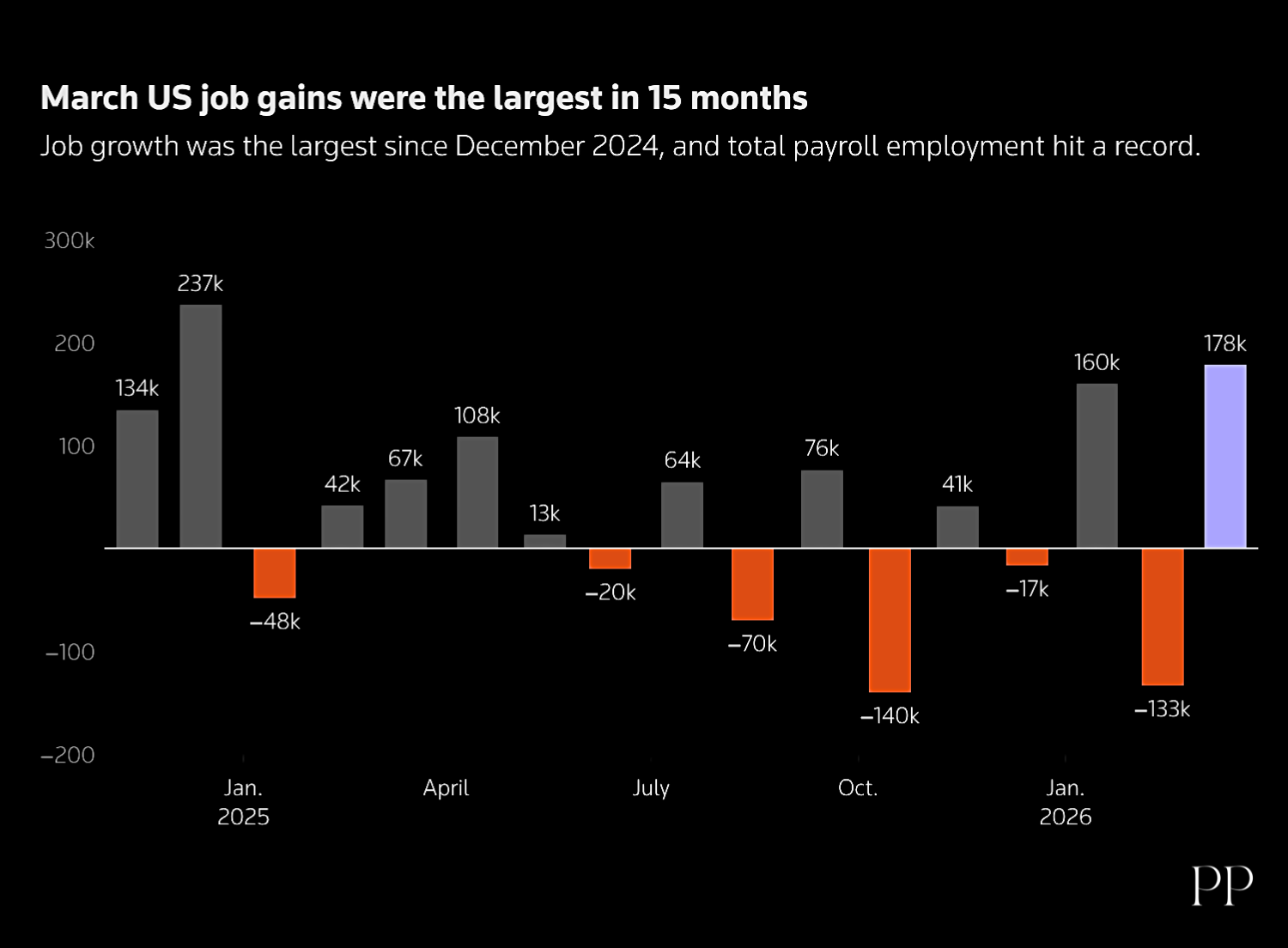
The U.S. labor market rebounded in March, with job growth coming in stronger than expected, though the broader trend of slowing momentum remains intact.
Nonfarm payrolls increased by 178,000 during the month, reversing February’s decline of 133,000 and far exceeding expectations of 59,000, according to the Bureau of Labor Statistics. February’s figure was revised down by 41,000, while January was revised up to 160,000, leaving the three-month average at a modest 68,000.
The unemployment rate edged down to 4.3%, though the decline was largely driven by a drop in labor force participation rather than stronger hiring.
 “The bottom line is March was somewhat encouraging, but it’s been a rocky year for the labor market with almost no hiring since last April,” said Heather Long, chief economist at Navy Federal Credit Union. “The data will likely keep the Federal Reserve on hold, but no one is declaring victory yet.”
Healthcare once again led job creation, adding 76,000 positions, partly boosted by returning workers after a strike at Kaiser Permanente. Ambulatory healthcare services accounted for a significant share of those gains. Construction added 26,000 jobs, while transportation and warehousing rose by 21,000.
On the downside, federal government employment fell by 18,000, and financial activities shed 15,000 jobs.
Despite the drop in the unemployment rate, the labor force shrank by 396,000, pushing participation down to 61.9%—its lowest level since November 2021. The household survey also showed 64,000 fewer people employed.
Broader measures of labor market health weakened slightly. An alternative unemployment rate, which includes discouraged workers and those working part-time for economic reasons, ticked up to 8%. Long-term unemployment remained elevated, although the average duration of joblessness fell to 25.3 weeks.
Wage growth also came in softer than expected. Average hourly earnings rose just 0.2% for the month and 3.5% year-on-year—the slowest annual increase since May 2021. Average weekly hours dipped slightly to 34.2.
Markets were subdued following the report, with U.S. equities closed for the Good Friday holiday. Stock futures edged lower, while Treasury yields moved higher in ongoing bond market trading.
The data reflects a shifting labor market, where fewer jobs are needed to maintain stability. The Federal Reserve Bank of St. Louis recently estimated that payroll growth of around 15,000 could be sufficient to keep unemployment steady.
Policymakers at the Federal Reserve continue to monitor labor data closely as they weigh interest rate decisions. While most favor a cautious, wait-and-see approach, some have called for rate cuts to guard against further labor market weakness.
With inflation still above target and energy prices rising amid ongoing geopolitical tensions, markets expect limited action from the central bank this year. According to CME Group’s FedWatch tool, there is little expectation of a rate move at the upcoming Federal Open Market Committee meeting, with a strong likelihood that policy will remain unchanged through year-end.
“The bottom line is March was somewhat encouraging, but it’s been a rocky year for the labor market with almost no hiring since last April,” said Heather Long, chief economist at Navy Federal Credit Union. “The data will likely keep the Federal Reserve on hold, but no one is declaring victory yet.”
Healthcare once again led job creation, adding 76,000 positions, partly boosted by returning workers after a strike at Kaiser Permanente. Ambulatory healthcare services accounted for a significant share of those gains. Construction added 26,000 jobs, while transportation and warehousing rose by 21,000.
On the downside, federal government employment fell by 18,000, and financial activities shed 15,000 jobs.
Despite the drop in the unemployment rate, the labor force shrank by 396,000, pushing participation down to 61.9%—its lowest level since November 2021. The household survey also showed 64,000 fewer people employed.
Broader measures of labor market health weakened slightly. An alternative unemployment rate, which includes discouraged workers and those working part-time for economic reasons, ticked up to 8%. Long-term unemployment remained elevated, although the average duration of joblessness fell to 25.3 weeks.
Wage growth also came in softer than expected. Average hourly earnings rose just 0.2% for the month and 3.5% year-on-year—the slowest annual increase since May 2021. Average weekly hours dipped slightly to 34.2.
Markets were subdued following the report, with U.S. equities closed for the Good Friday holiday. Stock futures edged lower, while Treasury yields moved higher in ongoing bond market trading.
The data reflects a shifting labor market, where fewer jobs are needed to maintain stability. The Federal Reserve Bank of St. Louis recently estimated that payroll growth of around 15,000 could be sufficient to keep unemployment steady.
Policymakers at the Federal Reserve continue to monitor labor data closely as they weigh interest rate decisions. While most favor a cautious, wait-and-see approach, some have called for rate cuts to guard against further labor market weakness.
With inflation still above target and energy prices rising amid ongoing geopolitical tensions, markets expect limited action from the central bank this year. According to CME Group’s FedWatch tool, there is little expectation of a rate move at the upcoming Federal Open Market Committee meeting, with a strong likelihood that policy will remain unchanged through year-end.