US Core inflation rate hit 3.4% in May
Image Credit : Agence France-Presse
Source Credit : Portfolio Prints
U.S. inflation accelerated further in May, with the Federal Reserve's preferred inflation gauge rising above 4.0% for the first time in three years. The increase was largely driven by a surge in energy prices following the Middle East conflict, reinforcing expectations that the Fed could still raise interest rates later this year.
However, with oil prices retreating to pre-conflict levels after the United States and Iran reached a preliminary peace agreement, headline inflation may have peaked in May. Lower gasoline prices are expected to ease inflationary pressures in the coming months, though the relief could be offset by rising prices for technology products, including semiconductors and electronics, amid continued investment in artificial intelligence.
Economists also warned that fertilizer shortages resulting from the conflict could push food prices higher, while persistent strength in services inflation is expected to keep underlying price pressures elevated. Financial markets now largely anticipate a Federal Reserve rate hike in September.
"PCE inflation remains too high and will keep the Fed on hold while policymakers continue considering another rate increase," said Scott Anderson, Chief U.S. Economist at BMO Capital Markets. "Services inflation will not be easily tamed by lower energy prices, ensuring the debate between inflation hawks and doves remains intense."
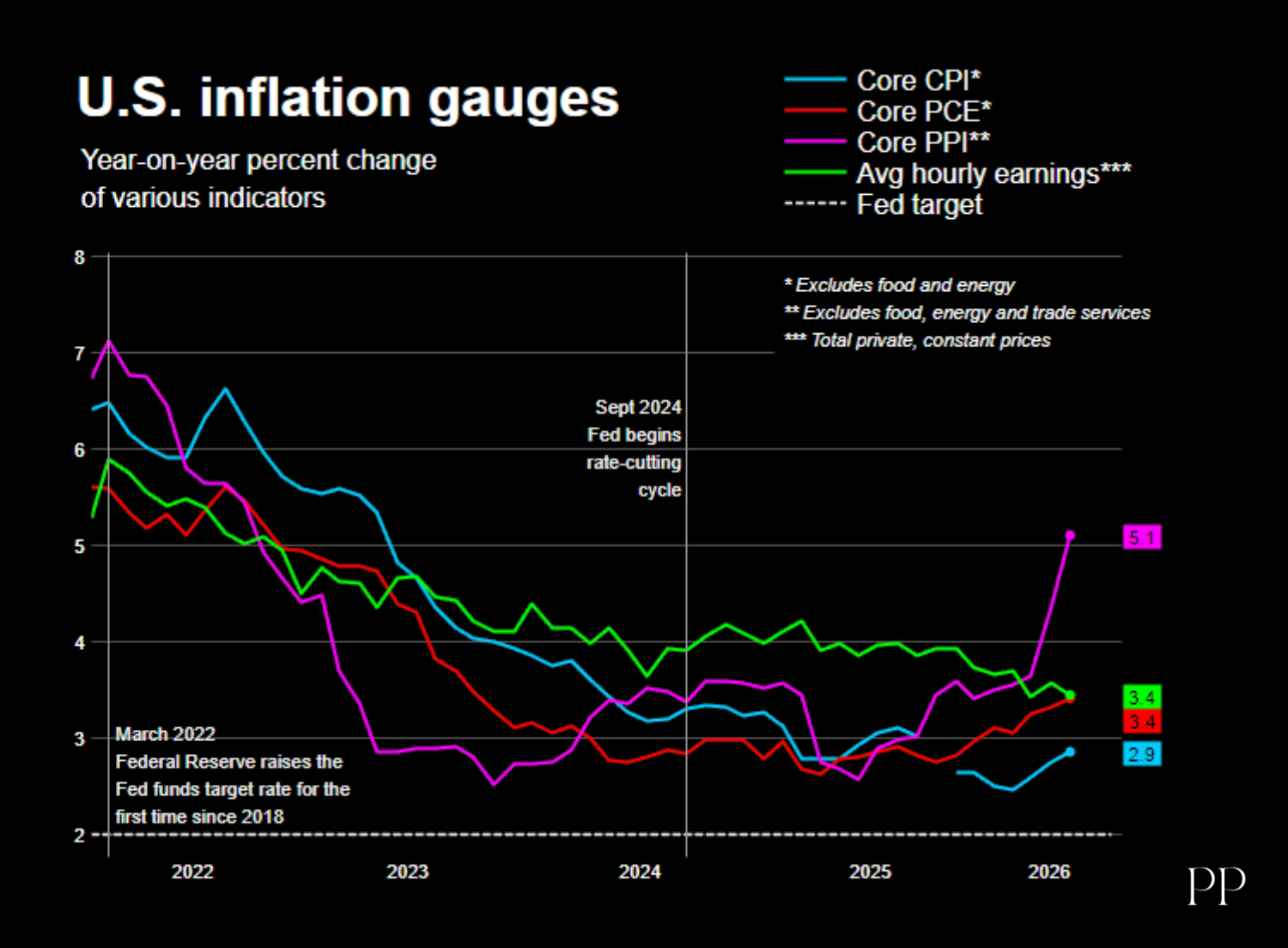 According to the Commerce Department's Bureau of Economic Analysis, the Personal Consumption Expenditures (PCE) Price Index rose 4.1% year-over-year in May, marking its highest reading since April 2023 and the first time it has exceeded 4.0% in three years. The annual inflation rate increased from 3.8% in April, while the monthly PCE index rose 0.4%, matching April's gain and meeting economists' expectations.
Goods prices increased 0.4% following a 0.7% rise in April. Energy prices surged, with gasoline and other fuel costs climbing 6.5%, while food prices edged up 0.1%. Services prices advanced 0.5%, driven by a 0.8% increase in transportation services as higher jet fuel costs pushed up airfares. Financial services and insurance prices rose 1.2% amid strong equity market performance, while healthcare and several other service categories also posted solid gains.
Energy markets had been disrupted after Iran assumed control of the Strait of Hormuz following U.S. and Israeli military action on February 28. By Thursday, U.S. officials said shipping volumes through the strategic waterway had nearly returned to pre-conflict levels, contributing to the decline in oil prices.
Even before the conflict, consumers were grappling with elevated prices resulting from President Trump's broad import tariffs. Persistent inflation has become a political challenge for the administration as Republicans seek to retain control of Congress in November's midterm elections. Trump's 2024 presidential campaign was built in part on promises to bring inflation under control.
Excluding the volatile food and energy categories, core PCE inflation rose 3.4% year-over-year in May, the highest reading since October 2023, after increasing 3.3% in April. On a monthly basis, core prices advanced 0.3% for the third consecutive month, underscoring the persistence of underlying inflationary pressures.
The Federal Reserve targets 2% inflation based on the PCE index. Last week, policymakers left the federal funds rate unchanged at 3.50%-3.75% but signaled through updated economic projections that additional policy tightening remains possible. Both headline and core PCE inflation have remained above the Fed's target since early 2021.
"While lower energy prices should ease headline inflation in the second half of the year, other supply-side pressures are likely to persist," said Gregory Daco, Chief Economist at EY-Parthenon. "Headline inflation should moderate, but core inflation is expected to remain uncomfortably above the Fed's 2% target."
Following the report, financial markets priced in roughly an 80% probability of a September rate hike, according to CME Group's FedWatch Tool. U.S. equities traded higher, the dollar weakened against major currencies, and Treasury yields declined.
Despite elevated inflation, consumer spending remained resilient. Supported by larger tax refunds, rising stock prices, and continued use of accumulated savings, personal consumption increased 0.7% in May after rising 0.4% in April, although part of the increase reflected higher prices.
According to the Commerce Department's Bureau of Economic Analysis, the Personal Consumption Expenditures (PCE) Price Index rose 4.1% year-over-year in May, marking its highest reading since April 2023 and the first time it has exceeded 4.0% in three years. The annual inflation rate increased from 3.8% in April, while the monthly PCE index rose 0.4%, matching April's gain and meeting economists' expectations.
Goods prices increased 0.4% following a 0.7% rise in April. Energy prices surged, with gasoline and other fuel costs climbing 6.5%, while food prices edged up 0.1%. Services prices advanced 0.5%, driven by a 0.8% increase in transportation services as higher jet fuel costs pushed up airfares. Financial services and insurance prices rose 1.2% amid strong equity market performance, while healthcare and several other service categories also posted solid gains.
Energy markets had been disrupted after Iran assumed control of the Strait of Hormuz following U.S. and Israeli military action on February 28. By Thursday, U.S. officials said shipping volumes through the strategic waterway had nearly returned to pre-conflict levels, contributing to the decline in oil prices.
Even before the conflict, consumers were grappling with elevated prices resulting from President Trump's broad import tariffs. Persistent inflation has become a political challenge for the administration as Republicans seek to retain control of Congress in November's midterm elections. Trump's 2024 presidential campaign was built in part on promises to bring inflation under control.
Excluding the volatile food and energy categories, core PCE inflation rose 3.4% year-over-year in May, the highest reading since October 2023, after increasing 3.3% in April. On a monthly basis, core prices advanced 0.3% for the third consecutive month, underscoring the persistence of underlying inflationary pressures.
The Federal Reserve targets 2% inflation based on the PCE index. Last week, policymakers left the federal funds rate unchanged at 3.50%-3.75% but signaled through updated economic projections that additional policy tightening remains possible. Both headline and core PCE inflation have remained above the Fed's target since early 2021.
"While lower energy prices should ease headline inflation in the second half of the year, other supply-side pressures are likely to persist," said Gregory Daco, Chief Economist at EY-Parthenon. "Headline inflation should moderate, but core inflation is expected to remain uncomfortably above the Fed's 2% target."
Following the report, financial markets priced in roughly an 80% probability of a September rate hike, according to CME Group's FedWatch Tool. U.S. equities traded higher, the dollar weakened against major currencies, and Treasury yields declined.
Despite elevated inflation, consumer spending remained resilient. Supported by larger tax refunds, rising stock prices, and continued use of accumulated savings, personal consumption increased 0.7% in May after rising 0.4% in April, although part of the increase reflected higher prices.
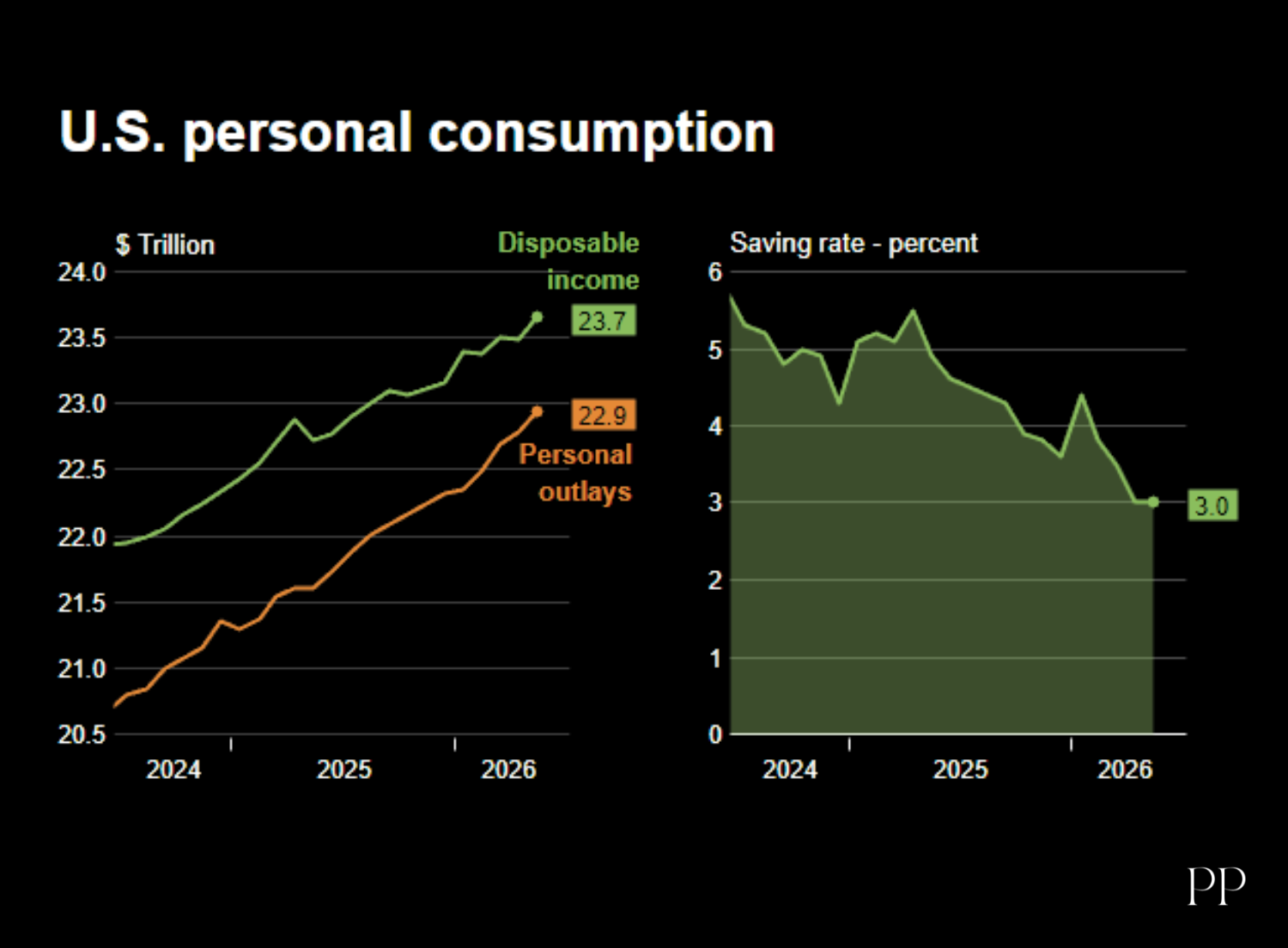 After adjusting for inflation, real consumer spending rose 0.3%, keeping household consumption on track for stronger growth in the second quarter following a weak start to the year. Disposable personal income rebounded 0.3% after three consecutive monthly declines but was unchanged from a year earlier.
Household income continued to benefit from steady wage growth in a resilient labor market, along with one-time government support for farmers affected by trade disruptions and inflation. Meanwhile, the personal saving rate remained near a four-year low of 3.0%, reflecting consumers' willingness to draw down savings to sustain spending.
Business investment also showed renewed strength. A separate Commerce Department report indicated that non-defense capital goods orders excluding aircraft—a key measure of business equipment spending—increased 1.6% in May after falling 0.7% in April. Part of the increase reflected higher prices, particularly for memory chips.
Equipment investment recorded double-digit growth in the first quarter, and economists now estimate second-quarter GDP growth at around 2.5% on an annualized basis, following a 2.1% expansion in the January-March quarter.
"The economy is receiving temporary support from several one-off factors, including tariff refunds, tax refunds, and spending related to the FIFA World Cup," said Brian Bethune, an economics professor at Boston College. "Most of those tailwinds are expected to fade by the end of the third quarter."
After adjusting for inflation, real consumer spending rose 0.3%, keeping household consumption on track for stronger growth in the second quarter following a weak start to the year. Disposable personal income rebounded 0.3% after three consecutive monthly declines but was unchanged from a year earlier.
Household income continued to benefit from steady wage growth in a resilient labor market, along with one-time government support for farmers affected by trade disruptions and inflation. Meanwhile, the personal saving rate remained near a four-year low of 3.0%, reflecting consumers' willingness to draw down savings to sustain spending.
Business investment also showed renewed strength. A separate Commerce Department report indicated that non-defense capital goods orders excluding aircraft—a key measure of business equipment spending—increased 1.6% in May after falling 0.7% in April. Part of the increase reflected higher prices, particularly for memory chips.
Equipment investment recorded double-digit growth in the first quarter, and economists now estimate second-quarter GDP growth at around 2.5% on an annualized basis, following a 2.1% expansion in the January-March quarter.
"The economy is receiving temporary support from several one-off factors, including tariff refunds, tax refunds, and spending related to the FIFA World Cup," said Brian Bethune, an economics professor at Boston College. "Most of those tailwinds are expected to fade by the end of the third quarter."