Elon Musk becomes world's first trillionaire
Image Credit : Bloomberg
Source Credit : Portfolio Prints
The entrepreneur behind Tesla and SpaceX has evolved from a technology executive into a internet phenomenon, political figure and now the world's first trillionaire.
At a time when concerns about wealth inequality are rising and public sentiment toward billionaires has become increasingly critical, Musk has managed to maintain a fiercely loyal following despite his extraordinary fortune. Unlike business icons such as Warren Buffett, whose approachable and modest persona won over the public, Musk has built his appeal on an unapologetic, unfiltered style that attracts both admiration and controversy.
Supporters view his unconventional approach as a sign of authenticity and visionary leadership. Critics, however, argue that he has accumulated unprecedented levels of influence, raising concerns about corporate governance, political involvement and the concentration of power around a single individual.
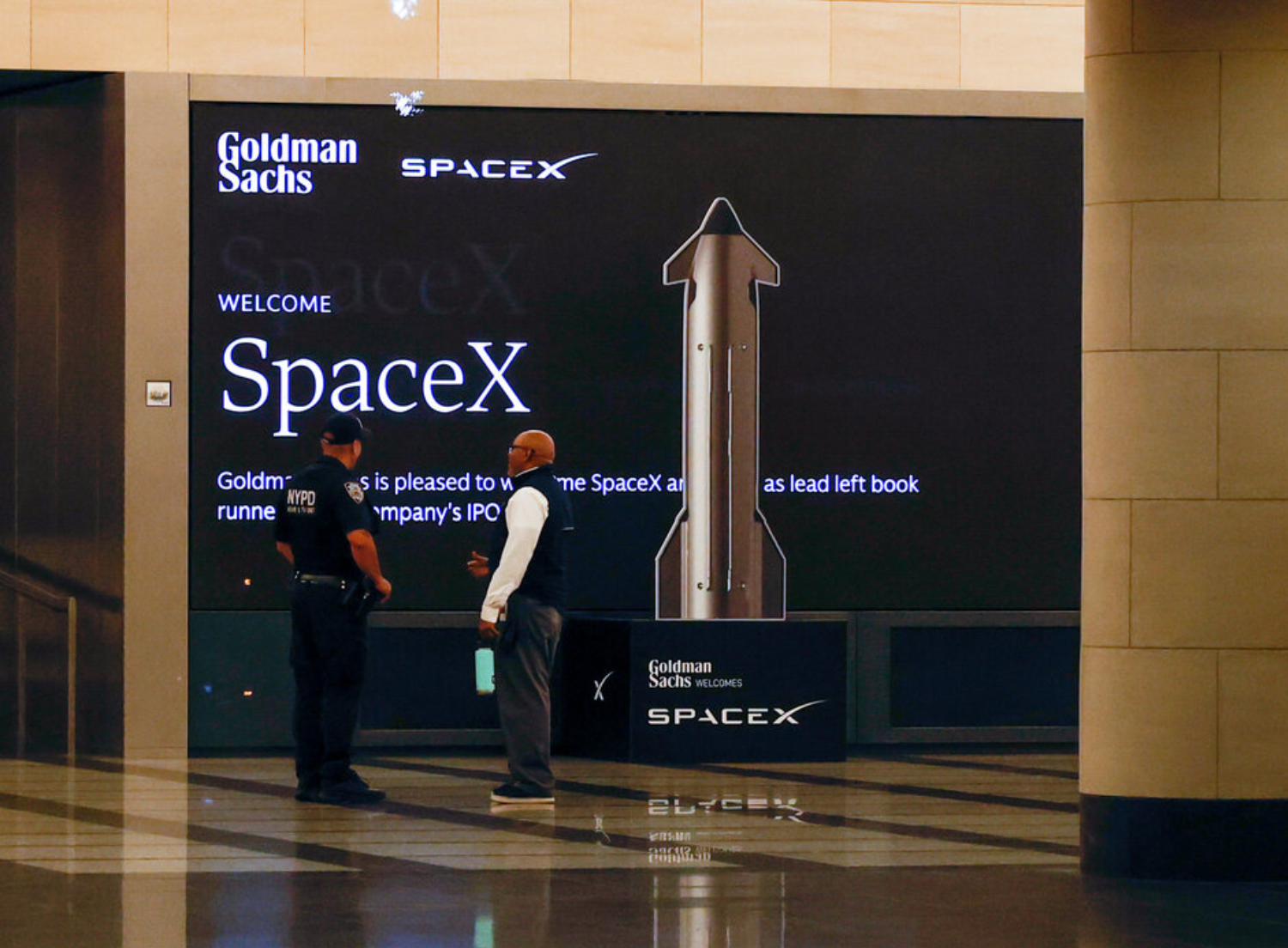
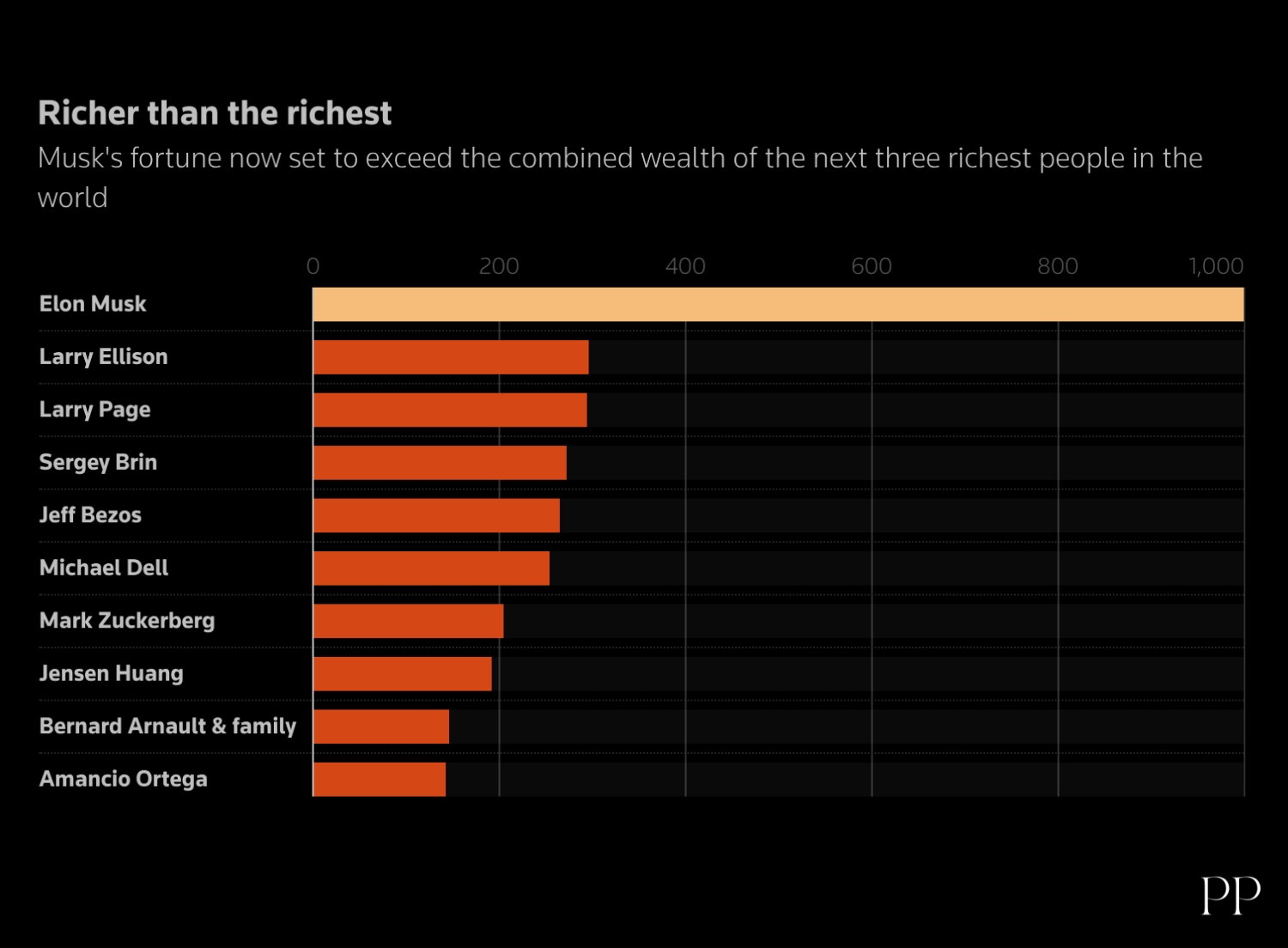
Investor confidence in Musk's ventures remains exceptionally strong. SpaceX, the rocket, satellite and artificial intelligence company at the center of his expanding empire, recently raised a record $75 billion through its initial public offering and surged on its first day of trading. The success pushed Musk's estimated net worth to approximately $1.1 trillion, placing him far ahead of every other person on the planet.
Forbes estimates that most of Musk's wealth now comes from his stake in SpaceX, valued at roughly $866 billion, alongside stock compensation packages that will continue to vest over time.
"The second-richest person has been hovering around $300 billion, and only one other person, Oracle founder Larry Ellison, has ever crossed $400 billion," said Matt Durot, deputy editor at Forbes Wealth.
 Musk first became a household name through Tesla and SpaceX before dramatically expanding his influence by acquiring social media platform Twitter for $44 billion in 2022. The purchase gave him direct access to hundreds of millions of users and transformed him into one of the world's most influential voices on issues ranging from politics and immigration to free speech and government spending.
His growing involvement in politics has also become one of his most divisive endeavors. His role in President Donald Trump's Department of Government Efficiency last year intensified scrutiny and coincided with declining Tesla sales in several international markets, where protests and consumer boycotts targeted the electric vehicle manufacturer.
Born in Pretoria, South Africa, in 1971, Musk is the son of a Canadian mother and South African father. He later moved to North America and graduated from the University of Pennsylvania in 1997.
His rise accelerated when he took over as Tesla's CEO in 2008 with a belief that electric vehicles could combine high performance with advanced software capabilities. Under his leadership, Tesla not only became the world's most valuable automaker but also accelerated the global transition toward electric transportation, forcing traditional manufacturers to rethink their long-term strategies.
Many investors now believe he can achieve a similar transformation in space exploration and artificial intelligence. However, SpaceX remains capital-intensive, and much of its enormous valuation is tied to technologies that may require years, or even decades, before becoming fully commercialized.
Beyond Tesla and SpaceX, Musk has co-founded several other companies, including tunneling startup The Boring Company and brain-computer interface developer Neuralink, further extending his influence across multiple industries.
Throughout his career, Musk has generated both praise and controversy in equal measure. He is widely credited with reshaping the automotive industry at a time when established manufacturers dismissed electric vehicles as commercially unviable.
"He renewed the world's respect for American ingenuity in automotive engineering," said Bob Lutz, former vice chairman of General Motors.
At the same time, Tesla has faced numerous legal disputes and shareholder concerns, many centered around Musk himself, including his controversial 2018 compensation package that was once valued at $56 billion.
His influence has become so extensive that market observers have coined a new term: the "Muskonomy," a vast interconnected ecosystem of businesses built around his vision and leadership.
That phenomenon has also created what many investors call the "Elon premium" — a valuation boost driven as much by confidence in Musk's ambitions as by traditional financial metrics.
"Much like Tesla, SpaceX is a bet on Elon Musk," said Matt Kennedy, senior strategist at Renaissance Capital.
"A market capitalization of $1.5 trillion to $2 trillion would throw traditional valuation models out the window and is best described as the Elon Musk premium."
The immense concentration of influence surrounding one entrepreneur has fueled ongoing debates about governance, conflicts of interest and the risks associated with tying entire corporations to a single personality.
Over the years, Musk has repeatedly engaged in public battles with regulators, journalists, short sellers, billionaires and media organizations, often turning social media into his primary battleground.
His relationship with President Donald Trump followed a similar trajectory. After helping support Trump's return to the White House and serving in a senior advisory capacity through the administration's Department of Government Efficiency initiative, Musk emerged as one of the president's closest corporate allies.
That alliance eventually deteriorated amid disagreements over policy and government spending, leading to a highly publicized feud. Although tensions have since eased, the episode highlighted the increasingly blurred boundaries between Musk's corporate empire and his political ambitions.
Despite ongoing criticism surrounding his unconventional behavior, many investors continue to believe his achievements outweigh the risks.
"Elon is the Edison of our time," JPMorgan Chase CEO Jamie Dimon said during a recent conversation with Musk.
Dimon, once involved in a prolonged legal dispute with Musk, has since become one of his admirers. Speaking to CNBC last year, he said the two had "hugged it out" and even described Musk as "our Einstein."
Musk first became a household name through Tesla and SpaceX before dramatically expanding his influence by acquiring social media platform Twitter for $44 billion in 2022. The purchase gave him direct access to hundreds of millions of users and transformed him into one of the world's most influential voices on issues ranging from politics and immigration to free speech and government spending.
His growing involvement in politics has also become one of his most divisive endeavors. His role in President Donald Trump's Department of Government Efficiency last year intensified scrutiny and coincided with declining Tesla sales in several international markets, where protests and consumer boycotts targeted the electric vehicle manufacturer.
Born in Pretoria, South Africa, in 1971, Musk is the son of a Canadian mother and South African father. He later moved to North America and graduated from the University of Pennsylvania in 1997.
His rise accelerated when he took over as Tesla's CEO in 2008 with a belief that electric vehicles could combine high performance with advanced software capabilities. Under his leadership, Tesla not only became the world's most valuable automaker but also accelerated the global transition toward electric transportation, forcing traditional manufacturers to rethink their long-term strategies.
Many investors now believe he can achieve a similar transformation in space exploration and artificial intelligence. However, SpaceX remains capital-intensive, and much of its enormous valuation is tied to technologies that may require years, or even decades, before becoming fully commercialized.
Beyond Tesla and SpaceX, Musk has co-founded several other companies, including tunneling startup The Boring Company and brain-computer interface developer Neuralink, further extending his influence across multiple industries.
Throughout his career, Musk has generated both praise and controversy in equal measure. He is widely credited with reshaping the automotive industry at a time when established manufacturers dismissed electric vehicles as commercially unviable.
"He renewed the world's respect for American ingenuity in automotive engineering," said Bob Lutz, former vice chairman of General Motors.
At the same time, Tesla has faced numerous legal disputes and shareholder concerns, many centered around Musk himself, including his controversial 2018 compensation package that was once valued at $56 billion.
His influence has become so extensive that market observers have coined a new term: the "Muskonomy," a vast interconnected ecosystem of businesses built around his vision and leadership.
That phenomenon has also created what many investors call the "Elon premium" — a valuation boost driven as much by confidence in Musk's ambitions as by traditional financial metrics.
"Much like Tesla, SpaceX is a bet on Elon Musk," said Matt Kennedy, senior strategist at Renaissance Capital.
"A market capitalization of $1.5 trillion to $2 trillion would throw traditional valuation models out the window and is best described as the Elon Musk premium."
The immense concentration of influence surrounding one entrepreneur has fueled ongoing debates about governance, conflicts of interest and the risks associated with tying entire corporations to a single personality.
Over the years, Musk has repeatedly engaged in public battles with regulators, journalists, short sellers, billionaires and media organizations, often turning social media into his primary battleground.
His relationship with President Donald Trump followed a similar trajectory. After helping support Trump's return to the White House and serving in a senior advisory capacity through the administration's Department of Government Efficiency initiative, Musk emerged as one of the president's closest corporate allies.
That alliance eventually deteriorated amid disagreements over policy and government spending, leading to a highly publicized feud. Although tensions have since eased, the episode highlighted the increasingly blurred boundaries between Musk's corporate empire and his political ambitions.
Despite ongoing criticism surrounding his unconventional behavior, many investors continue to believe his achievements outweigh the risks.
"Elon is the Edison of our time," JPMorgan Chase CEO Jamie Dimon said during a recent conversation with Musk.
Dimon, once involved in a prolonged legal dispute with Musk, has since become one of his admirers. Speaking to CNBC last year, he said the two had "hugged it out" and even described Musk as "our Einstein."