US Consumer Price Index increases 0.9% in March
Image Credit : Bloomberg
Source Credit : Portfolio Prints
U.S. consumer prices surged in March at their fastest pace in nearly four years, driven largely by a sharp escalation in energy costs following the conflict with Iran. The spike—especially in gasoline and diesel—has intensified economic pressure on President Donald Trump, whose approval ratings have slipped amid growing dissatisfaction over the rising cost of living.
While Friday’s report from the U.S. Department of Labor showed that core inflation—excluding volatile food and energy prices—remained relatively moderate, economists cautioned against optimism. They noted that March data captured only the initial shock from surging oil prices, with broader and more persistent inflationary effects likely to emerge in the coming months.
Analysts also pointed out that the subdued core inflation reading was partly distorted by unusual declines in used vehicle prices and health insurance costs. These temporary factors masked underlying price pressures, offering little reassurance to policymakers at the Federal Reserve, who are now widely expected to keep interest rates elevated through the year.
The inflation report followed a strong rebound in job growth for March, reinforcing the view that the labor market remains resilient despite mounting price pressures.
“The economy has taken a direct inflation hit as a result of the Middle East conflict,” said Christopher Rupkey, chief economist at FWDBONDS. He warned that once inflation accelerates, it becomes extremely difficult to reverse, raising the risk of prolonged consumer strain.
The Consumer Price Index (CPI) rose 0.9% in March—the largest monthly increase since June 2022, when prices spiked in response to the Russia-Ukraine war. This followed a 0.3% rise in February and was broadly in line with economists’ expectations.
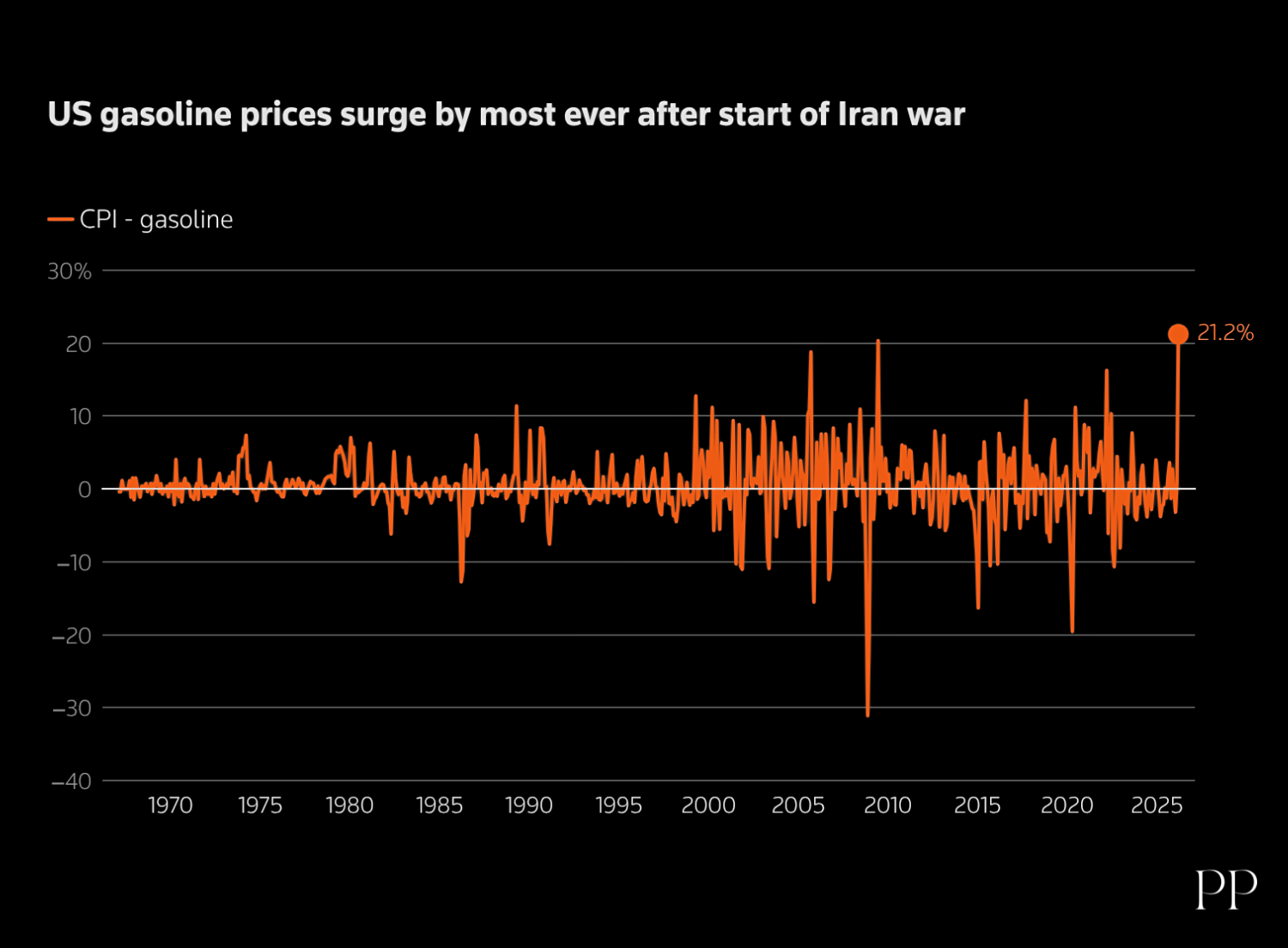 Energy prices were the dominant driver. Gasoline costs surged 21.2%—the biggest increase since records began in 1967—accounting for nearly three-quarters of the overall CPI rise. Diesel and other fuels also posted record gains, jumping 30.8%.
The conflict involving the U.S., Israel, and Iran has pushed global crude oil prices up more than 30%, sending average U.S. gasoline prices above $4 per gallon for the first time in over three years. Although President Trump announced a tentative two-week ceasefire tied to reopening the Strait of Hormuz, markets remain skeptical about its durability.
On an annual basis, consumer prices climbed 3.3% through March, up from 2.4% in February, underscoring worsening affordability challenges. The surge also carries political implications for Trump, who campaigned on lowering costs ahead of the 2024 election.
Public sentiment has deteriorated sharply, with surveys showing declining confidence in Trump’s economic leadership at a critical moment as Republicans prepare to defend congressional majorities in upcoming midterm elections.
The White House attempted to shift the narrative, highlighting stable or declining prices in categories such as eggs, beef, and prescription drugs, attributing the trends to administration policies.
However, broader consumer sentiment remains bleak. The University of Michigan’s consumer sentiment index dropped to a record low, reflecting widespread concern that the Iran conflict will continue to fuel inflation.
Economists warn that even if energy prices stabilize, they tend to fall slowly—a phenomenon often described as “rockets and feathers.” This suggests that elevated fuel costs could linger, sustaining inflationary pressure across the economy.
Financial markets reacted negatively: equities declined, the dollar weakened against major currencies, and U.S. Treasury yields moved higher as investors adjusted to a more persistent inflation outlook.
Food prices were flat in March after rising 0.4% in February. Grocery prices dipped slightly, aided by a 3.4% drop in egg prices and declines in some meat categories. However, beef and veal prices remained elevated, rising 12.1% year-on-year, while fruits and vegetables also posted gains.
Core CPI rose 0.2% for the second consecutive month. The reading was dampened by a 0.4% drop in used vehicle prices and a 1.5% decline in prescription drug costs—movements some economists believe are temporary.
Healthcare costs presented a mixed picture. Health insurance prices fell again, down 1.4% in March and 5.3% year-on-year, though some analysts questioned the reliability of the data, noting that real-world premiums have risen following the expiration of tax credits.
Elsewhere, airline fares rose 2.7%, signaling that higher fuel costs may already be feeding into services inflation. Rent increases remained moderate, while apparel prices rose 1.0%, partly reflecting tariff pass-through effects. Household goods and services also edged higher.
Annual core inflation ticked up to 2.6% in March from 2.5% in February, indicating that underlying price pressures are gradually building.
The Federal Reserve primarily tracks the Personal Consumption Expenditures (PCE) index, and economists estimate that core PCE rose 0.2% in March, pushing the annual rate to around 3.1%.
Looking ahead, economists expect the Middle East conflict to continue feeding into broader inflation through higher transportation, logistics, and production costs. Rising diesel prices could increase the cost of goods distribution, while higher energy input costs may lift prices for fertilizers, plastics, and other industrial materials.
This inflation backdrop has led many economists to conclude that the Fed is unlikely to cut interest rates this year. Minutes from its March policy meeting suggest that some officials are even considering further rate hikes if inflation persists.
The Fed has maintained its benchmark interest rate in the 3.50%–3.75% range. Still, a minority of economists argue that weakening consumer demand—driven by declining purchasing power—could eventually limit businesses’ ability to raise prices, reopening the door to potential rate cuts later in the year.
Energy prices were the dominant driver. Gasoline costs surged 21.2%—the biggest increase since records began in 1967—accounting for nearly three-quarters of the overall CPI rise. Diesel and other fuels also posted record gains, jumping 30.8%.
The conflict involving the U.S., Israel, and Iran has pushed global crude oil prices up more than 30%, sending average U.S. gasoline prices above $4 per gallon for the first time in over three years. Although President Trump announced a tentative two-week ceasefire tied to reopening the Strait of Hormuz, markets remain skeptical about its durability.
On an annual basis, consumer prices climbed 3.3% through March, up from 2.4% in February, underscoring worsening affordability challenges. The surge also carries political implications for Trump, who campaigned on lowering costs ahead of the 2024 election.
Public sentiment has deteriorated sharply, with surveys showing declining confidence in Trump’s economic leadership at a critical moment as Republicans prepare to defend congressional majorities in upcoming midterm elections.
The White House attempted to shift the narrative, highlighting stable or declining prices in categories such as eggs, beef, and prescription drugs, attributing the trends to administration policies.
However, broader consumer sentiment remains bleak. The University of Michigan’s consumer sentiment index dropped to a record low, reflecting widespread concern that the Iran conflict will continue to fuel inflation.
Economists warn that even if energy prices stabilize, they tend to fall slowly—a phenomenon often described as “rockets and feathers.” This suggests that elevated fuel costs could linger, sustaining inflationary pressure across the economy.
Financial markets reacted negatively: equities declined, the dollar weakened against major currencies, and U.S. Treasury yields moved higher as investors adjusted to a more persistent inflation outlook.
Food prices were flat in March after rising 0.4% in February. Grocery prices dipped slightly, aided by a 3.4% drop in egg prices and declines in some meat categories. However, beef and veal prices remained elevated, rising 12.1% year-on-year, while fruits and vegetables also posted gains.
Core CPI rose 0.2% for the second consecutive month. The reading was dampened by a 0.4% drop in used vehicle prices and a 1.5% decline in prescription drug costs—movements some economists believe are temporary.
Healthcare costs presented a mixed picture. Health insurance prices fell again, down 1.4% in March and 5.3% year-on-year, though some analysts questioned the reliability of the data, noting that real-world premiums have risen following the expiration of tax credits.
Elsewhere, airline fares rose 2.7%, signaling that higher fuel costs may already be feeding into services inflation. Rent increases remained moderate, while apparel prices rose 1.0%, partly reflecting tariff pass-through effects. Household goods and services also edged higher.
Annual core inflation ticked up to 2.6% in March from 2.5% in February, indicating that underlying price pressures are gradually building.
The Federal Reserve primarily tracks the Personal Consumption Expenditures (PCE) index, and economists estimate that core PCE rose 0.2% in March, pushing the annual rate to around 3.1%.
Looking ahead, economists expect the Middle East conflict to continue feeding into broader inflation through higher transportation, logistics, and production costs. Rising diesel prices could increase the cost of goods distribution, while higher energy input costs may lift prices for fertilizers, plastics, and other industrial materials.
This inflation backdrop has led many economists to conclude that the Fed is unlikely to cut interest rates this year. Minutes from its March policy meeting suggest that some officials are even considering further rate hikes if inflation persists.
The Fed has maintained its benchmark interest rate in the 3.50%–3.75% range. Still, a minority of economists argue that weakening consumer demand—driven by declining purchasing power—could eventually limit businesses’ ability to raise prices, reopening the door to potential rate cuts later in the year.