Are High Interest Rates Becoming the New Normal?
Image Credit : Bloomberg
Source Credit : Portfolio Prints
Introduction
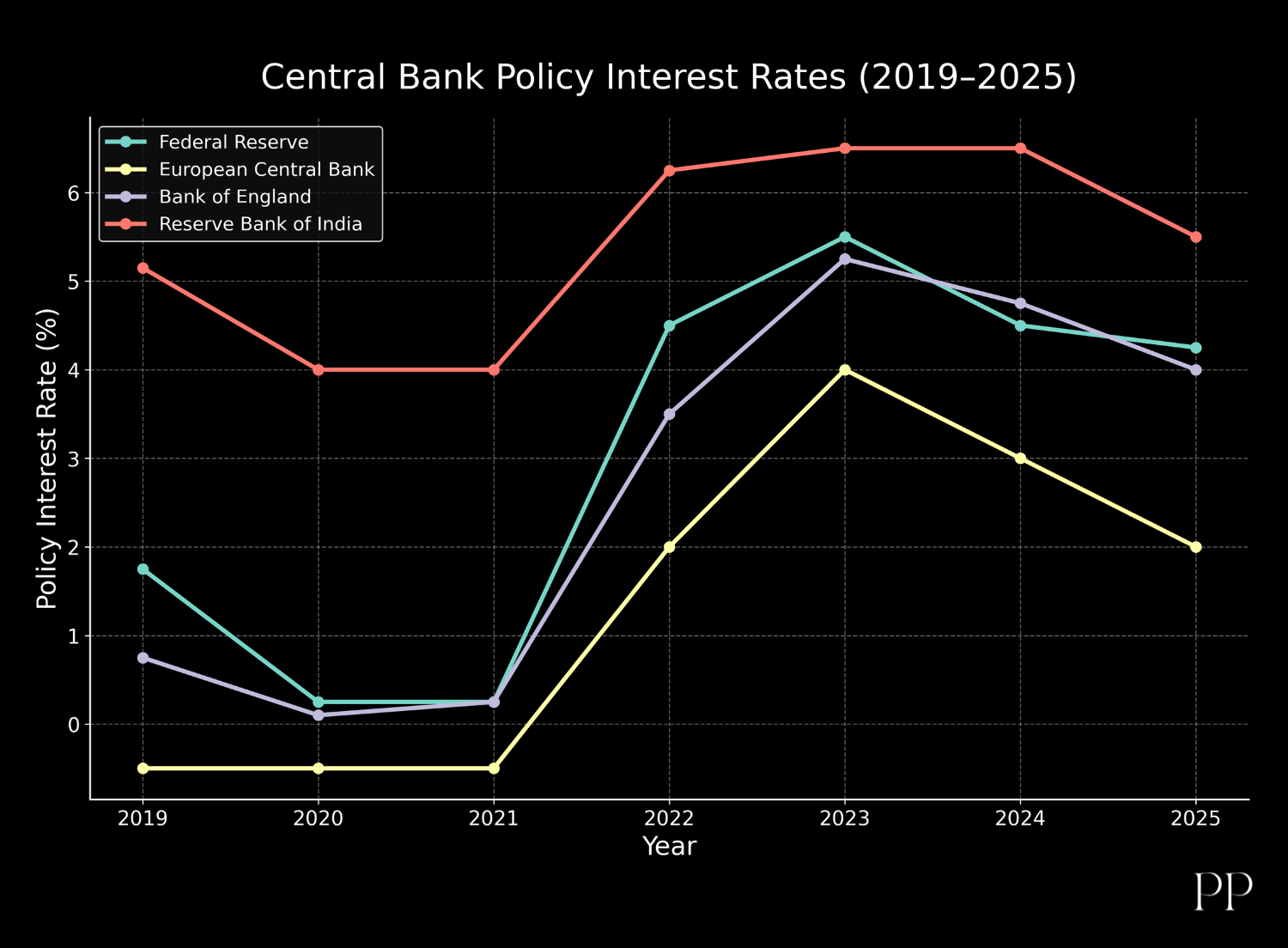
Between the Global Financial Crisis of 2008 and the COVID-19 pandemic, most advanced economies experienced an unprecedented era of low interest rates supported by quantitative easing and subdued inflation (Bernanke, 2022). This environment changed dramatically after 2021 when supply chain disruptions, expansionary fiscal policies, labor shortages, and geopolitical shocks generated inflation rates unseen in decades (IMF, 2024). Consequently, central banks—including the Federal Reserve, the European Central Bank, the Bank of England, and the Reserve Bank of India—implemented rapid increases in policy interest rates to contain inflation.
The concept of "higher for longer" has become a defining feature of contemporary monetary policy. Rather than expecting a rapid return to near-zero rates, policymakers increasingly emphasize maintaining restrictive monetary conditions until inflation expectations are firmly anchored (Federal Reserve, 2024). This paper investigates whether this shift represents a temporary adjustment or the emergence of a new global interest-rate regime.
Central Banks and Inflation Expectations
Central banks remain the primary institutions responsible for maintaining price stability. Following the post-pandemic inflation shock, monetary authorities adopted synchronized tightening cycles. According to the IMF (2024), coordinated policy tightening significantly reduced inflation while avoiding widespread financial instability.
Inflation expectations play a critical role in monetary policy effectiveness. If households and firms believe inflation will remain elevated, wage negotiations and pricing decisions may perpetuate inflationary pressures. Research by the BIS (2024) indicates that maintaining policy credibility requires interest rates to remain sufficiently restrictive until inflation expectations return to target levels.
The Federal Reserve's policy decisions between 2022 and 2025 illustrate this strategy. Despite declining inflation, policymakers repeatedly emphasized that premature easing could reignite price pressures. Similar positions were adopted by the ECB and the Bank of England, demonstrating increasing international convergence in monetary policy frameworks.
| Institution |
Primary Objective |
Monetary Policy Approach |
| Federal Reserve |
Price stability and employment |
Higher-for-longer policy stance |
| European Central Bank |
Inflation near 2% |
Gradual normalization after tightening |
| Bank of England |
Inflation control |
Restrictive monetary policy |
| Reserve Bank of India |
Inflation targeting with growth support |
Data-dependent policy adjustments |
Bond Markets and Financial Conditions
Government bond markets provide valuable insight into long-term interest rate expectations. During the 2010s, exceptionally low sovereign bond yields reflected weak growth and subdued inflation. Since 2022, however, yields have risen substantially across advanced economies.
Higher bond yields increase borrowing costs for governments, businesses, and households. According to the OECD (2024), persistent fiscal deficits and expanding public debt have increased the supply of government securities, placing upward pressure on long-term yields. Simultaneously, investors demand higher real returns to compensate for inflation uncertainty.
The normalization of bond markets suggests that financial conditions may remain tighter than during the previous decade. Rather than viewing elevated yields as temporary anomalies, markets increasingly price them as reflecting structural economic changes.
Housing Markets and Corporate Borrowing
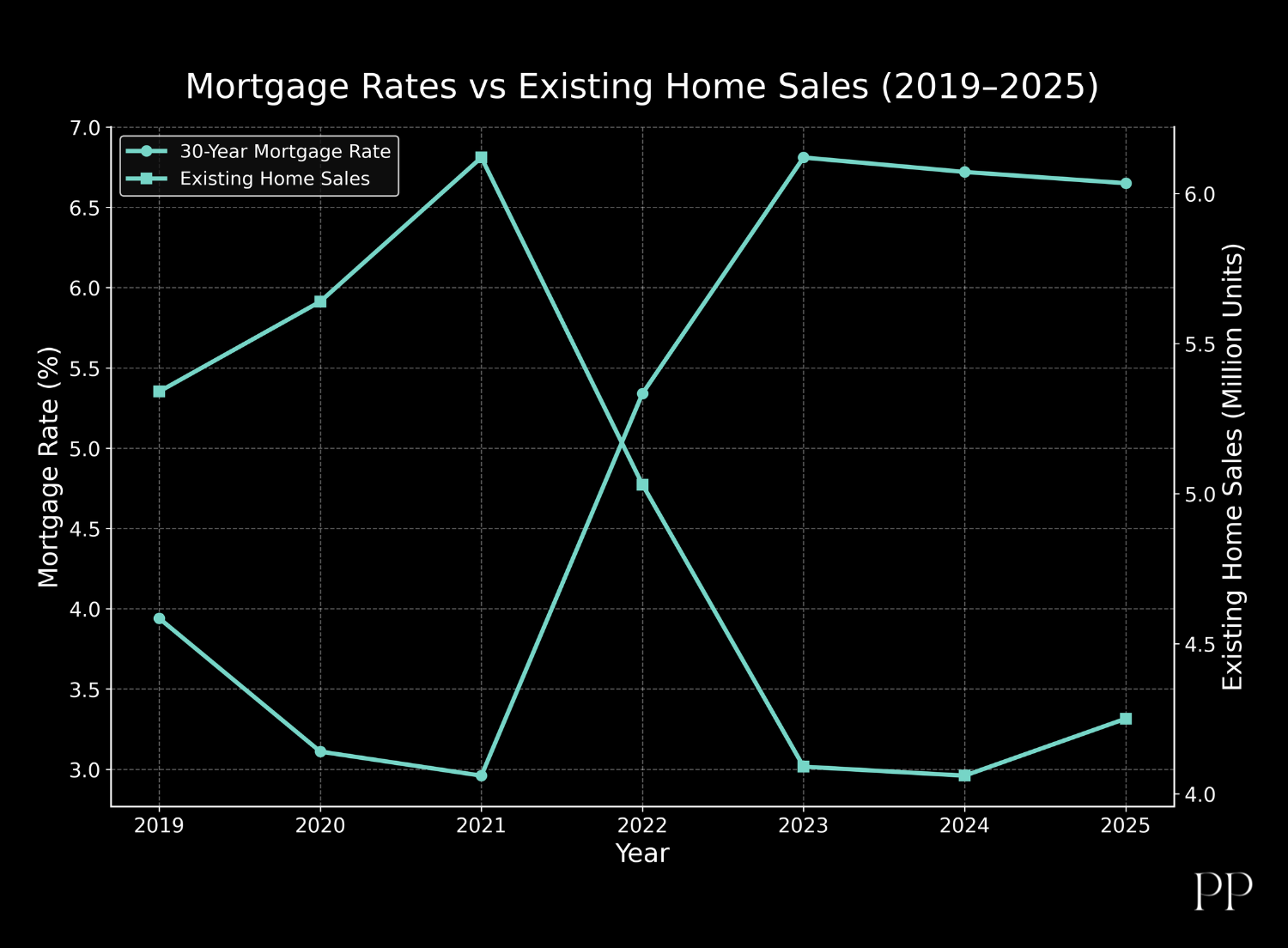
Housing markets are among the sectors most sensitive to interest rate changes. Rising mortgage rates reduce housing affordability, lower transaction volumes, and moderate price appreciation. The World Bank (2024) notes that residential investment has weakened across numerous advanced economies as financing costs increased.
Corporate borrowing has experienced similar pressures. Firms that previously benefited from inexpensive debt financing now face substantially higher refinancing costs. Highly leveraged firms, particularly those in commercial real estate and capital-intensive industries, remain vulnerable to prolonged periods of elevated interest rates.
| Economic Sector |
Primary Impact |
Long-Term Implication |
| Housing |
Higher mortgage costs |
Slower price growth |
| Corporate Sector |
Higher financing expenses |
Reduced investment |
| Government |
Increased debt servicing |
Fiscal pressure |
| Consumers |
Higher borrowing costs |
Lower discretionary spending |
Although stronger corporate balance sheets and banking reforms have reduced systemic risks compared with 2008, elevated borrowing costs continue to constrain investment and economic expansion.
Emerging Markets
Emerging markets are particularly vulnerable to changes in global interest rates because they depend heavily on international capital flows and external financing. When major central banks, especially the U.S. Federal Reserve, raise policy interest rates, investors often shift capital from emerging economies to advanced markets offering higher and safer returns. This movement can lead to capital outflows, currency depreciation, and increased borrowing costs for governments and businesses. According to the International Monetary Fund (2024), countries with high levels of external debt are especially exposed, as a stronger U.S. dollar raises the cost of servicing foreign-denominated liabilities.
Despite these challenges, many emerging-market central banks have responded more effectively than during previous tightening cycles. Institutions such as the Reserve Bank of India, the Central Bank of Brazil, and the Bank of Mexico began raising interest rates early to contain inflation and maintain financial stability. Improved monetary policy frameworks, stronger banking regulations, and larger foreign exchange reserves have increased resilience across many developing economies. The Bank for International Settlements (2024) notes that these reforms have strengthened financial systems, although countries with high public debt and weak fiscal positions continue to face significant risks.
the economic outlook for emerging markets will depend largely on the pace of monetary policy normalization in advanced economies and domestic policy effectiveness. A gradual easing of global interest rates could encourage renewed investment and reduce financing costs, supporting economic growth. However, persistent inflationary pressures, geopolitical uncertainty, and elevated public debt suggest that borrowing costs are likely to remain above the historically low levels experienced during the 2010s. Consequently, emerging-market policymakers must continue balancing inflation control, exchange-rate stability, and sustainable economic growth in an increasingly uncertain global financial environment.
Financial Stability and Future Outlook
Financial stability remains closely linked to interest rate dynamics. According to the BIS (2024), rapid monetary tightening exposes vulnerabilities in banking systems, shadow banking institutions, and highly indebted sectors. Nevertheless, stronger regulatory frameworks implemented after the Global Financial Crisis have increased resilience within many financial institutions.
Emerging markets face distinct challenges. Higher interest rates in advanced economies encourage capital flows toward developed financial markets, increasing exchange rate volatility and borrowing costs for developing economies. Nevertheless, several emerging-market central banks—including the RBI—initiated monetary tightening earlier than advanced economies, helping maintain investor confidence and moderate inflation.
| Structural Factor |
Expected Influence |
| Persistent inflation risks |
Upward pressure on policy rates |
| Large public debt |
Higher government borrowing costs |
| Geopolitical fragmentation |
Increased production costs |
| Aging populations |
Reduced labor supply and higher wages |
| Energy transition investment |
Greater capital demand |
Looking ahead, interest rates are unlikely to remain permanently at current restrictive levels. However, evidence from the IMF, BIS, and OECD suggests that the exceptionally low interest-rate environment of the 2010s is also unlikely to return soon. Structural inflationary forces, increased fiscal borrowing, demographic transitions, and geopolitical uncertainty imply that neutral interest rates may settle above their pre-pandemic averages.
Conclusion
The evidence indicates that high interest rates are becoming relatively more normal than during the decade preceding the pandemic. While inflation has moderated across many economies, central banks remain committed to preserving price stability through cautious and data-dependent monetary policy. Bond markets increasingly reflect expectations of higher long-term yields, while housing markets and corporate investment continue to adjust to more expensive financing conditions. Emerging markets face additional challenges arising from global capital flows and exchange-rate volatility, although stronger macroeconomic frameworks have improved resilience. Overall, future interest rates are expected to decline gradually from recent peaks but remain structurally above the extraordinarily low levels that characterized the post-2008 period. Consequently, policymakers, businesses, and investors should prepare for a prolonged environment in which higher borrowing costs constitute the new macroeconomic baseline rather than a temporary deviation.