U.S. existing home sales unexpectedly fell in June
Image Credit : Reuters
Source Credit : Portfolio Prints
U.S. existing home sales unexpectedly declined in June as limited housing inventory pushed prices to a record high, while elevated mortgage rates—kept under pressure by ongoing tensions in the Middle East—continued to sideline prospective buyers.
The latest report from the National Association of Realtors (NAR) highlights the deepening affordability crisis confronting many Americans, particularly younger households seeking to enter the housing market. Despite these challenges, economists still expect residential investment to make a modest positive contribution to second-quarter economic growth, marking its first potential boost in more than a year.
The housing sector has also become a growing focus of policymakers. Congress recently approved a bipartisan housing affordability package aimed at expanding supply and curbing investor-driven competition in the single-family home market. The legislation includes provisions to limit purchases by large investment firms and streamline environmental reviews for new construction projects. However, President Donald Trump has indicated he will withhold his signature until lawmakers pass a separate voting-related bill.
 “Affordability pressures remain most severe for lower-income households and first-time buyers,” said Nancy Vanden Houten, lead U.S. economist at Oxford Economics. “Higher-income households—many of whom already own homes—are in a far stronger position than younger renters trying to enter the market.”
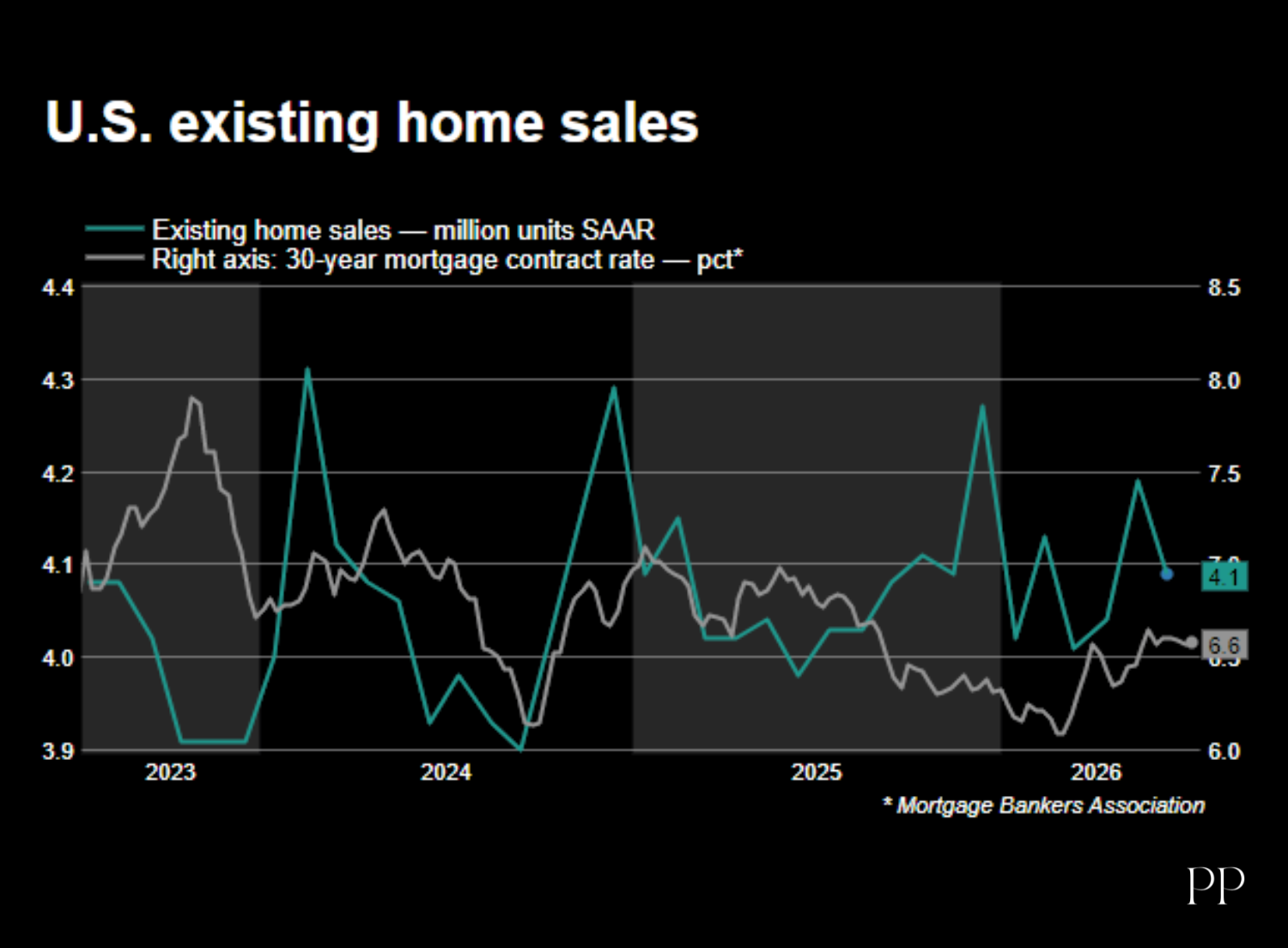
Existing home sales fell 2.4% in June to a seasonally adjusted annual rate of 4.09 million units, missing economists’ expectations for an increase to 4.20 million units. Sales activity has remained stuck near the 4 million-unit level for several years, a trend NAR Chief Economist Lawrence Yun compared to conditions seen during the 2008 housing downturn.
Supply constraints remain a major obstacle. The United States continues to face a significant housing shortage, particularly in the entry-level segment, with the National Association of Home Builders estimating a deficit of roughly 1.2 million homes. Inventory of previously owned homes slipped 0.6% in June to 1.56 million units, remaining well below the pre-pandemic norm of 1.8–1.9 million units, although supply was still 1.3% higher than a year earlier.
Tight inventory has continued to fuel price gains. The median existing-home price rose 1.8% from a year earlier to a record $440,600 in June. Most transactions occurred in the $250,000–$500,000 range. Because existing-home sales are recorded at closing, June’s figures largely reflect contracts signed during April and May.
Mortgage costs remain a significant headwind. Although rates have eased from the spike triggered by the U.S.-Iran conflict, the average 30-year fixed mortgage rate remains roughly 50 basis points above pre-conflict levels, according to Freddie Mac. Higher borrowing costs have discouraged both buyers and sellers, as many homeowners remain reluctant to give up mortgages secured at rates below 5%.
On a year-over-year basis, home sales rose 2.8% in June, driven primarily by higher-end properties. Sales of single-family homes priced above $500,000 posted double-digit growth, while transactions involving homes priced below $100,000 declined 1.7%.
“Affordability pressures remain most severe for lower-income households and first-time buyers,” said Nancy Vanden Houten, lead U.S. economist at Oxford Economics. “Higher-income households—many of whom already own homes—are in a far stronger position than younger renters trying to enter the market.”
Existing home sales fell 2.4% in June to a seasonally adjusted annual rate of 4.09 million units, missing economists’ expectations for an increase to 4.20 million units. Sales activity has remained stuck near the 4 million-unit level for several years, a trend NAR Chief Economist Lawrence Yun compared to conditions seen during the 2008 housing downturn.
Supply constraints remain a major obstacle. The United States continues to face a significant housing shortage, particularly in the entry-level segment, with the National Association of Home Builders estimating a deficit of roughly 1.2 million homes. Inventory of previously owned homes slipped 0.6% in June to 1.56 million units, remaining well below the pre-pandemic norm of 1.8–1.9 million units, although supply was still 1.3% higher than a year earlier.
Tight inventory has continued to fuel price gains. The median existing-home price rose 1.8% from a year earlier to a record $440,600 in June. Most transactions occurred in the $250,000–$500,000 range. Because existing-home sales are recorded at closing, June’s figures largely reflect contracts signed during April and May.
Mortgage costs remain a significant headwind. Although rates have eased from the spike triggered by the U.S.-Iran conflict, the average 30-year fixed mortgage rate remains roughly 50 basis points above pre-conflict levels, according to Freddie Mac. Higher borrowing costs have discouraged both buyers and sellers, as many homeowners remain reluctant to give up mortgages secured at rates below 5%.
On a year-over-year basis, home sales rose 2.8% in June, driven primarily by higher-end properties. Sales of single-family homes priced above $500,000 posted double-digit growth, while transactions involving homes priced below $100,000 declined 1.7%.
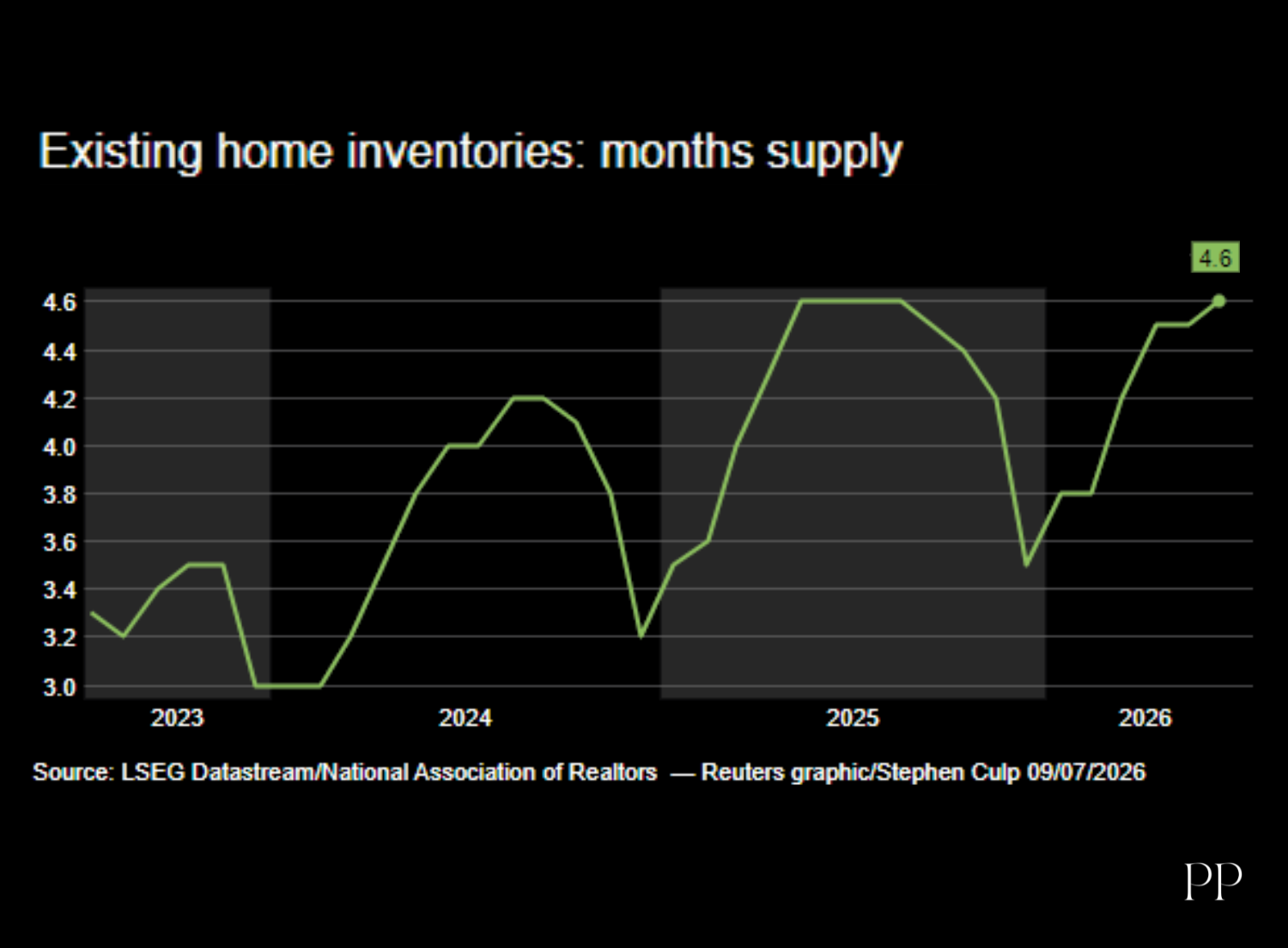 At the current sales pace, it would take 4.6 months to clear the existing inventory of homes on the market, unchanged from a year earlier. While that level represents a slight improvement from the extreme shortages seen during the pandemic, it remains insufficient to meet demand in many regions.
Housing activity remains a weak spot for the broader economy. Residential investment—which includes home construction, renovations, and brokerage activity—has contracted for five consecutive quarters. However, economists anticipate a modest rebound in the second quarter. The Atlanta Federal Reserve’s GDPNow model currently estimates annualized economic growth of 1.3% for the April–June period, following a 2.1% expansion in the first quarter.
Geopolitical developments have added another layer of uncertainty. Iran’s military launched attacks on U.S. facilities in Gulf states following American strikes on Iranian targets, raising concerns about the durability of a fragile ceasefire and increasing volatility across global energy markets. The conflict has contributed to renewed inflation concerns and strengthened expectations that the Federal Reserve may need to maintain a restrictive policy stance for longer.
Minutes from the Fed’s June 16–17 meeting showed policymakers becoming increasingly concerned about inflation risks. While officials left the benchmark federal funds rate unchanged at 3.50%–3.75%, updated projections signaled growing support for a potential rate increase later this year.
Financial markets responded cautiously. Wall Street stocks traded higher, the U.S. dollar remained broadly stable, and Treasury yields retreated after earlier gains.
Meanwhile, separate Labor Department data suggested the labor market remains resilient despite slower job growth. Initial claims for state unemployment benefits fell by 2,000 to a seasonally adjusted 215,000 in the week ended July 4, broadly matching economists’ forecasts.
On an unadjusted basis, claims rose by 9,967 to 224,583, led by increases in California, Michigan, and Missouri. Economists attributed much of the rise to seasonal factors, including temporary shutdowns at manufacturing facilities and distortions linked to school-year employment patterns.
“Claims remain low and stable, with the increase in recent months largely reflecting residual seasonal effects rather than a deterioration in labor market conditions,” said Samuel Tombs, chief U.S. economist at Pantheon Macroeconomics. “Looking ahead, layoffs are likely to remain subdued.”
Even so, policymakers remain alert to potential downside risks. Fed officials generally expect labor market conditions to remain stable in the near term, but meeting minutes noted that geopolitical uncertainty and broader economic risks could eventually lead businesses to scale back hiring or implement layoffs.
Continuing claims—a measure of the number of people receiving unemployment benefits—rose by 8,000 to 1.814 million in the week ended June 27. While some of the increase reflects seasonal adjustment issues, economists note that slower hiring is making it harder for unemployed workers to find new jobs. Reinforcing that view, a recent Conference Board survey showed the share of consumers who believe jobs are “hard to get” climbed in June to its highest level since January 2021.
Taken together, the data point to an economy that remains resilient but increasingly constrained by high borrowing costs, persistent affordability pressures, and geopolitical uncertainty. For the housing market, record prices and elevated mortgage rates continue to create significant barriers to homeownership, particularly for first-time buyers, even as broader economic growth remains positive.
At the current sales pace, it would take 4.6 months to clear the existing inventory of homes on the market, unchanged from a year earlier. While that level represents a slight improvement from the extreme shortages seen during the pandemic, it remains insufficient to meet demand in many regions.
Housing activity remains a weak spot for the broader economy. Residential investment—which includes home construction, renovations, and brokerage activity—has contracted for five consecutive quarters. However, economists anticipate a modest rebound in the second quarter. The Atlanta Federal Reserve’s GDPNow model currently estimates annualized economic growth of 1.3% for the April–June period, following a 2.1% expansion in the first quarter.
Geopolitical developments have added another layer of uncertainty. Iran’s military launched attacks on U.S. facilities in Gulf states following American strikes on Iranian targets, raising concerns about the durability of a fragile ceasefire and increasing volatility across global energy markets. The conflict has contributed to renewed inflation concerns and strengthened expectations that the Federal Reserve may need to maintain a restrictive policy stance for longer.
Minutes from the Fed’s June 16–17 meeting showed policymakers becoming increasingly concerned about inflation risks. While officials left the benchmark federal funds rate unchanged at 3.50%–3.75%, updated projections signaled growing support for a potential rate increase later this year.
Financial markets responded cautiously. Wall Street stocks traded higher, the U.S. dollar remained broadly stable, and Treasury yields retreated after earlier gains.
Meanwhile, separate Labor Department data suggested the labor market remains resilient despite slower job growth. Initial claims for state unemployment benefits fell by 2,000 to a seasonally adjusted 215,000 in the week ended July 4, broadly matching economists’ forecasts.
On an unadjusted basis, claims rose by 9,967 to 224,583, led by increases in California, Michigan, and Missouri. Economists attributed much of the rise to seasonal factors, including temporary shutdowns at manufacturing facilities and distortions linked to school-year employment patterns.
“Claims remain low and stable, with the increase in recent months largely reflecting residual seasonal effects rather than a deterioration in labor market conditions,” said Samuel Tombs, chief U.S. economist at Pantheon Macroeconomics. “Looking ahead, layoffs are likely to remain subdued.”
Even so, policymakers remain alert to potential downside risks. Fed officials generally expect labor market conditions to remain stable in the near term, but meeting minutes noted that geopolitical uncertainty and broader economic risks could eventually lead businesses to scale back hiring or implement layoffs.
Continuing claims—a measure of the number of people receiving unemployment benefits—rose by 8,000 to 1.814 million in the week ended June 27. While some of the increase reflects seasonal adjustment issues, economists note that slower hiring is making it harder for unemployed workers to find new jobs. Reinforcing that view, a recent Conference Board survey showed the share of consumers who believe jobs are “hard to get” climbed in June to its highest level since January 2021.
Taken together, the data point to an economy that remains resilient but increasingly constrained by high borrowing costs, persistent affordability pressures, and geopolitical uncertainty. For the housing market, record prices and elevated mortgage rates continue to create significant barriers to homeownership, particularly for first-time buyers, even as broader economic growth remains positive.